
Wheat-FreeNo Added Sugar
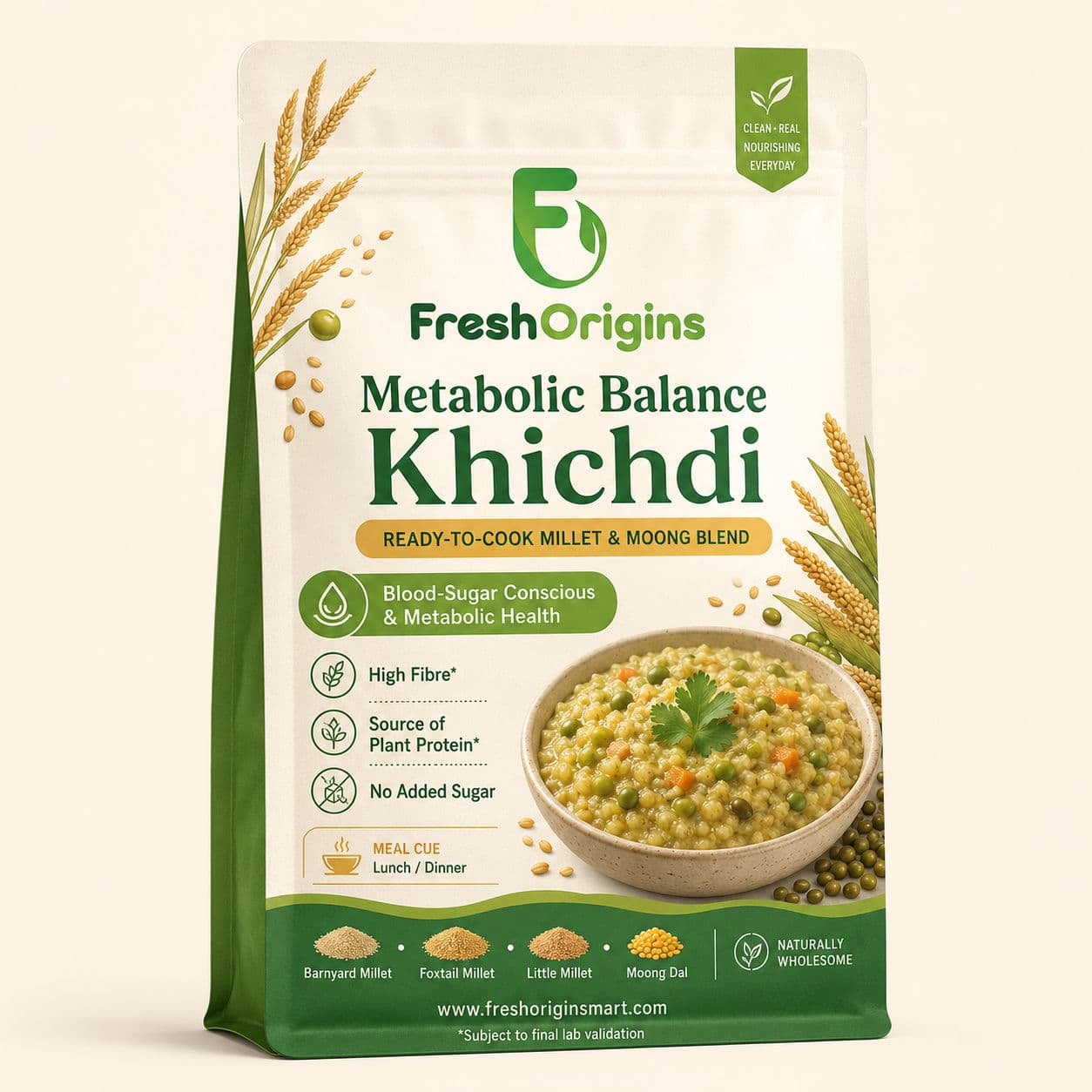
Metabolic Balance Khichdi
Millet and moong blend for an easy, fibre-forward meal. · 250 g
Best for: Families who want an easy, fibre-forward weeknight dinner, cooked just like regular khichdi.
₹135₹145
Health goal · Educational guidance
Whole-grain meal options for blood-sugar-conscious meal planning.
Blood-sugar-conscious eating is supported by your overall pattern of meals rather than any single ingredient. Choosing whole grains over refined ones where you can, combining grains with pulses, and including vegetables and seeds all help. Fresh Origins builds several ready-to-cook staples around this pattern, so familiar Indian meals can carry more of what this theme calls for, per serving.
A blood-sugar-conscious eatingapproach isn't about a single “super” ingredient. It's about the overall pattern of your meals: choosing whole grains over refined ones where you can, combining grains with pulses, and including vegetables and seeds. Done consistently, this pattern tends to make meals more satisfying and supports a balanced diet.
Whole grains and millets contribute dietary fibre and add to the protein in a meal. Pulses — moong, chana, urad and others — bring complementary plant protein. Eating them together across the day is a long-standing feature of Indian cooking, from adai to khichdi to dal-rice.
Small, repeatable swaps usually matter more than dramatic changes. Varying your grains across the week, keeping refined flour and added sugar to a minimum, and pairing staples with vegetables are everyday habits that align well with a blood-sugar-conscious eating pattern.
Products that may fit this goal
Each product appears here because it has a documented, reviewed relationship to this goal — not an automatic tag.
Millet and moong blend for an easy, fibre-forward meal. · 250 g
Best for: Families who want an easy, fibre-forward weeknight dinner, cooked just like regular khichdi.
₹135₹145
Putting it on the plate
Build a plate around a whole-grain or millet base, add a pulse element, and include a vegetable plus a healthy fat such as a small amount of ghee, nuts, or seeds. Keep portions reasonable and rotate your grains across the week rather than relying on one.
Reviewed for accuracy
RD · Scope of review: nutritional accuracy of educational content on this page. Reviewed [date]. Next review: [date].
Reviewer details shown are placeholders until an expert is formally onboarded. The reviewer checks educational accuracy — this is not a medical endorsement of any product.
References
Sources are placeholders pending the content-approval workflow (writer → expert review → compliance review → published).
Questions
Needs vary by age, body size, activity, and health conditions. This page offers general food guidance; for personalised targets, consult a qualified dietitian or healthcare professional.
Yes — combining whole grains and pulses across the day is a well-established way to build balanced vegetarian meals, alongside dairy, nuts, and seeds.
No. They are foods that can fit into a balanced diet. They are not a treatment and do not replace professional advice.