Look closely at Indian home cooking and you’ll notice a quiet piece of wisdom repeated everywhere: grains and pulses almost always show up together. Dal with rice or roti. Idli and dosa from rice and urad. Khichdi from grain and moong. Adai from millets and dals. Rajma or chana alongside a bowl of rice. This isn’t a coincidence, and it isn’t a modern nutrition trend — it’s a pairing that generations of cooks arrived at intuitively, long before anyone wrote about amino acids. It’s one of the most practical ideas in vegetarian eating, and it’s worth understanding on purpose, because once you see it, you can lean into it everywhere.
A cornerstone of Indian cooking
There’s a reason nearly every regional cuisine in India has its own beloved grain-and-pulse dish. In a largely vegetarian food culture, the combination of a grain with a pulse became the dependable core of the everyday meal — filling, satisfying, affordable, and endlessly adaptable to what grew locally. South India leans on rice with urad and other dals; the north pairs wheat rotis with rajma and chana; the west has its dhoklas and its grain-and-lentil batters; the east and central regions have their khichdis. Different grains, different pulses, same underlying logic. When a pattern shows up independently across so many kitchens and so many centuries, it usually reflects something that simply works — and this one does.
Why the pairing works
Here’s the idea in plain terms. Grains and pulses each bring plant protein to the plate, but the protein in a grain and the protein in a pulse aren’t identical. Their amino-acid profiles differ — grains tend to be lower in one set of amino acids, pulses in another. Eaten together as part of a varied diet, they complement each other, so a grain-and-pulse plate is a more balanced source of plant protein than either grain or pulse eaten alone. This is a general nutrition principle, not a promise about any specific outcome for any specific person.
It’s worth being clear about what this does and doesn’t mean. You don’t need to eat the grain and the pulse in the very same mouthful or the very same meal for your diet to be balanced — a varied diet across the day does the job. Pairing them at a meal is simply a convenient, time-tested way to make that variety happen without thinking hard about it. And there’s a bonus beyond protein: both grains and pulses contribute dietary fibre, which adds bulk and helps a meal feel satisfying. Put those together and you have the backbone of a good vegetarian meal — nutrition built into the format of the food itself, rather than bolted on as a supplement.
It’s also worth resisting the urge to overclaim here. Pairing grains and pulses is a sound, general principle of balanced vegetarian eating — it is not a special formula that guarantees any particular result for any particular person. Think of it as a sensible default that makes everyday meals more balanced and more satisfying, one that generations of cooks landed on for good reason. That’s a genuinely useful thing to know, and it’s enough on its own; it doesn’t need to be dressed up as anything more dramatic than what it is.
You’re probably already doing it
The reassuring part: you almost certainly don’t need a brand-new habit, just a little intention. Most traditional Indian meals already pair the two, quietly and by default. The opportunity is simply to make the pairing a touch more deliberate on the days it slips — to serve a genuinely generous portion of dal rather than a token spoonful, to stir a handful of pulses into a khichdi, to reach for a pulse-forward adai at breakfast instead of a plain refined-flour option. Small nudges, familiar food.
A tour of the classics, region by region
Half the joy of this pairing is how many delicious forms it already takes. A few of the greatest hits:
- Dal-chawal — the everyday North and East Indian pairing of rice with a dal. Humble, complete, and beloved for good reason.
- Roti + dal — wheat or millet flatbread with a bowl of dal or a pulse curry. The northern counterpart to dal-chawal.
- Idli and dosa — South Indian steamed cakes and crisp crepes made from a fermented batter of rice and urad dal. The grain and the pulse are literally ground together.
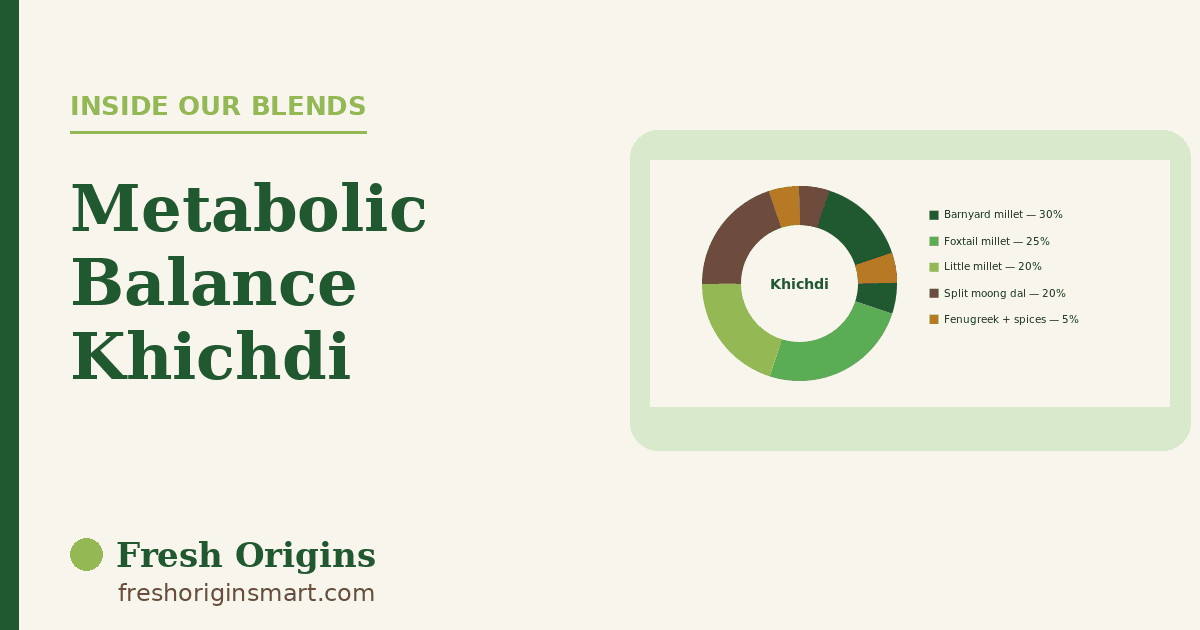
- Khichdi — grain (rice or millets) simmered with moong dal into a soft, comforting one-pot meal found in countless regional versions.
- Pongal — the South Indian rice-and-moong dish, savoury or sweet, that anchors festivals and everyday breakfasts alike.
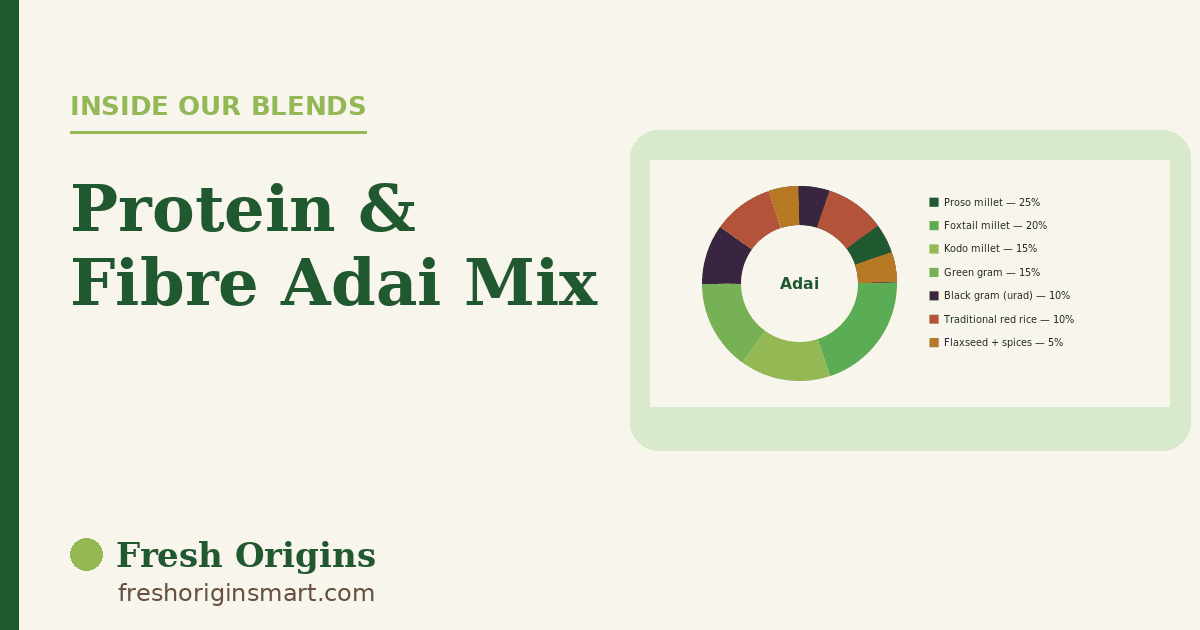
- Adai — a thick, savoury South Indian pancake built from a batter of millets or rice plus a mix of dals; heartier and more pulse-forward than a dosa.
- Dhokla — the steamed, spongy Gujarati snack made from a fermented batter of rice and Bengal gram.
- Chana-rice and rajma-chawal — chickpeas or kidney beans in a spiced gravy, served over rice. The North Indian comfort-food pairing par excellence.
Notice how effortlessly the grain and the pulse combine across every region and every meal of the day. You’re not learning a new cuisine — you’re just noticing a pattern you already cook.
More everyday ways to pair, without extra effort
Beyond the famous dishes, the pairing quietly slots into ordinary cooking in dozens of small ways. A plain rice meal becomes a paired one the moment you ladle a generous dal over it. A roti dinner tips into balance when a bowl of chana or a moong sabzi joins the plate. A pot of vegetable pulao gains from a side of dal or a raita made a touch heartier. Even a simple curd-rice bowl pairs beautifully with a spoon of soaked or sprouted moong stirred through. None of these ask you to cook anything new — they ask only that you notice the gap and fill it with a pulse you already keep in the kitchen. That habit of noticing is the whole skill, and it costs nothing.
It also helps to keep a pulse or two always on hand and quick to deploy — a jar of roasted chana, a batch of cooked dal in the fridge, some sprouts on the counter. When the pulse is within arm’s reach, pairing stops being a plan and becomes a reflex. Over a week, those small reflexive additions add up to a diet that’s naturally more varied and balanced, meal after meal, with no counting and no fuss.
A simple framework for a balanced vegetarian plate
If you want one easy mental model, build each main meal around three things:
- A grain — rice, millets, or a wheat/millet roti. Whole-grain versions add more fibre, but the choice is yours.
- A pulse — a dal, or chana, rajma, or another legume, served generously rather than as an afterthought.
- A vegetable — a sabzi, a salad, or vegetables cooked into the dish, for colour, fibre, and variety.
Grain plus pulse plus vegetable. That’s the whole framework. It requires no counting, no weighing, and no special ingredients — just a habit of glancing at the plate and asking, “Is there a pulse here?” If the answer is yes, you’re already most of the way to a balanced vegetarian meal.
A sample day of pairings
To show how naturally this falls into a normal day:
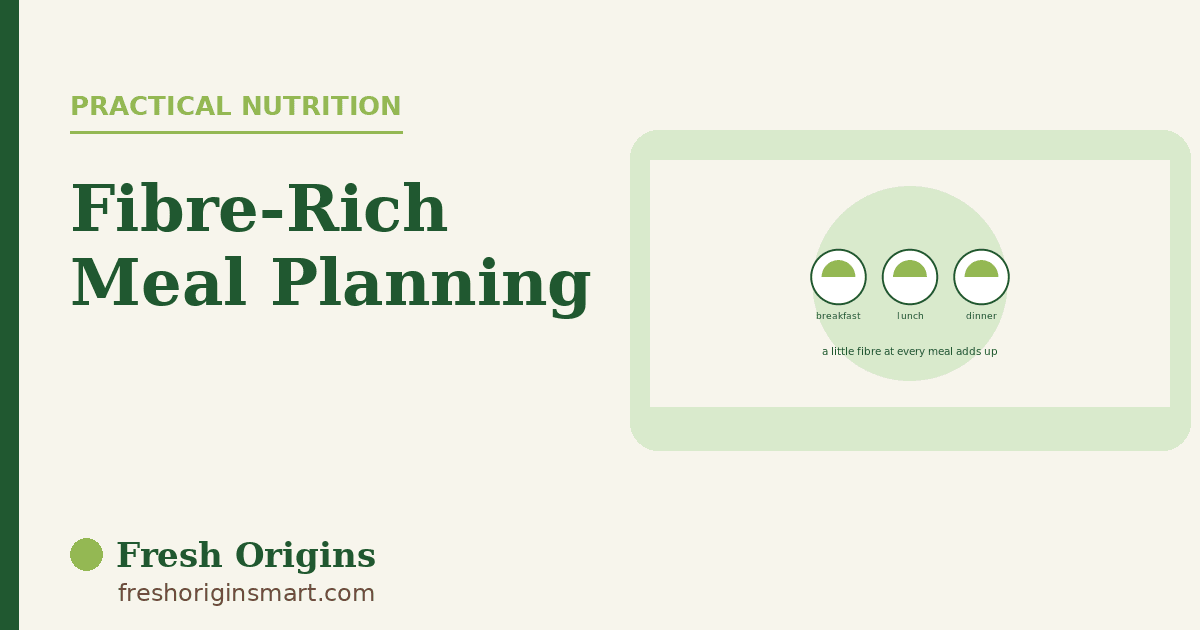
- Breakfast: a pulse-forward adai with chutney, or idli with sambar — grain and pulse together from the very first meal.
- Lunch: rice or roti with a generous dal and a vegetable — the everyday thali logic.
- Snack: roasted chana, or a small bowl of chana chaat — a pulse-based nibble that keeps the pattern going.
- Dinner: a millet khichdi, or rajma-chawal with a side salad — a comforting grain-and-pulse one-pot to close the day.
No single meal is doing anything unusual. It’s the same wisdom repeated, meal after meal.
How Fresh Origins blends bake this pairing in
Here’s a small confession: this pairing is so central to good vegetarian eating that we built our blends around it. You don’t have to assemble the grain-and-pulse combination yourself — in many of our products, it’s already done.
- Metabolic Balance Khichdi brings millets and moong dal together in one pack, so a classic grain-and-pulse meal is a single pot away.
- Protein & Fibre Adai Mix combines millets with green and black gram — the traditional adai pairing, ready to soak and cook.
- Our Roti Mix, blended with Bengal gram and sprouted green gram, folds the pulse right into the flatbread, so even your roti carries the pairing before you’ve ladled out the dal.
Think of the blends as the pairing made effortless. You can always build these combinations from scratch — and we’d encourage you to — but on a busy day, having the grain and the pulse already matched together removes one more small decision.
A simple rule of thumb
If you remember nothing else, remember this: at each main meal, aim to have a grain and a pulse on the plate together. It’s a small framing, drawn straight from the way Indian kitchens have always cooked, and it makes vegetarian meals more balanced without any counting, weighing, or fuss. Variety and balance, one familiar plate at a time.
Frequently asked questions
Do the grain and pulse have to be in the same meal?
Not strictly. A varied diet across the day is what matters, and grains and pulses complement each other as plant-protein sources over the course of your meals. Pairing them at a meal is simply a convenient, time-tested way to make that variety happen without much thought.
Is a grain-and-pulse plate enough protein for a vegetarian?
Grains and pulses together form a more balanced source of plant protein than either alone, and they’re a cornerstone of vegetarian eating. Individual protein needs vary from person to person, so for personalised guidance a qualified professional is the right person to ask.
Which grain-and-pulse dish is easiest to start with?
Khichdi is hard to beat — grain and pulse simmered together in one pot, endlessly forgiving. Dal-chawal and roti-with-dal are equally simple and probably already in your rotation.
Are Fresh Origins blends a replacement for cooking from scratch?
No — they’re a convenience. The grain-and-pulse pairing in dishes like khichdi and adai is easy to make yourself, and we’d encourage it. The blends just save you the assembly on busier days, with the pairing already matched for you.