
Gluten-FreeNo Added Sugar
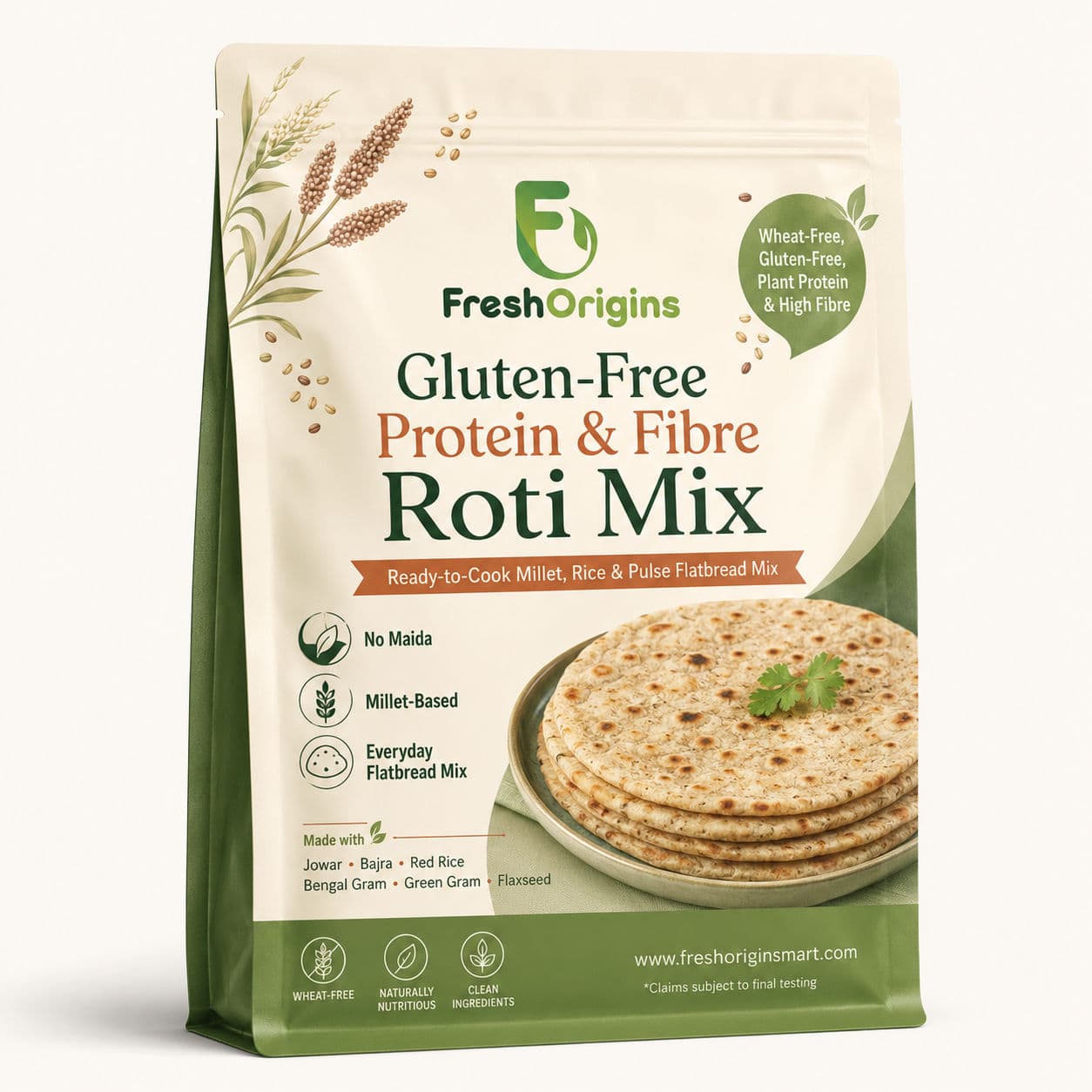
Gluten-Free Protein & Fibre Roti Mix
Wheat-free millet, rice, and pulse flour blend for everyday flatbreads. · 500 g
Best for: People choosing wheat-free or gluten-free* flatbreads without giving up everyday rotis.
₹285
Comparison · Millets
These are India's three heavyweight millets — jowar (sorghum), bajra (pearl millet), and ragi (finger millet). They're often lumped together as 'millets', but they differ usefully: in minerals, in season, in the dishes they're best at. Knowing which does which job makes your rotation smarter.
All three are excellent whole grains — pick by job, not by ranking. Ragi stands out for calcium (among the highest of any everyday grain) and makes superb porridge and soft mudde. Bajra leads on iron and energy density and shines in winter rotis. Jowar is the mildest all-rounder — the easiest roti flour to start with and gentle enough for everyday use. The best answer is all three, rotated.
Side by side
| Jowar (sorghum) | Bajra (pearl millet) | Ragi (finger millet) | |
|---|---|---|---|
| Protein (per 100 g raw) | ~10 g | ~11 g | ~7 g |
| Fibre (per 100 g raw) | ~10 g | ~11 g | ~11 g |
| Standout mineral | Magnesium, B vitamins | Iron (~8 mg) | Calcium (~344 mg — exceptional) |
| Taste | Mild, neutral | Nutty, robust, slightly bitter edge | Earthy, distinctive |
| Best-known dishes | Jowar bhakri/roti, dosa | Bajra roti, khichdi, winter porridges | Ragi mudde, ragi malt/porridge, dosa |
| Traditional season | Year-round | Winter (warming) | Year-round; summer ragi malt is classic |
| Easiest for beginners? | Yes — mildest flavour | Moderate — stronger taste | Moderate — distinctive taste, loved in the South |
Approximate values per 100 g raw grain from published Indian food-composition data (IFCT 2017). Individual lots vary; treat as directional.
Ragi's calcium content — roughly 344 mg per 100 g — is in a different league from other grains, which typically manage 10–50 mg. For households light on dairy, growing children, and seniors thinking about bone health, ragi porridge or mudde is one of the simplest food-first ways to add calcium to the day.
It also ferments beautifully (ragi dosa, ambali), and fermentation is a traditional technique that tends to improve mineral availability. Read our full ragi-family explainer in the Learn section for preparation details.
Bajra is the energy-dense one — the grain of Rajasthani and Deccan winters, eaten as thick rotis with jaggery and ghee. Its iron content (~8 mg/100 g) is the highest of the three, which matters in a country where iron intake commonly runs low, especially for women.
Its robust, nutty flavour is the strongest of the trio. If your household is new to millets, introduce bajra blended with other flours first — which is exactly how our roti mix uses it.
Jowar is the diplomat: mild enough that jowar rotis pass the family test on day one, with fibre and magnesium numbers that still comfortably beat wheat or white rice. Maharashtrian and North Karnataka kitchens have run on jowar bhakri for generations.
If you're choosing a single millet to begin your rotation, jowar is usually the right first pick — then add ragi for calcium days and bajra for winter.
The verdict
Calcium — porridges, mudde, malt, and dosa. Especially relevant for low-dairy households, children, and seniors.
Iron and winter warmth — hearty rotis and khichdi in the cooler months.
Everyday rotis and the gentlest introduction to millets for a hesitant family.
Put it into practice
Our roti mix blends millet and pulse flours so you get the benefits without managing three separate flour tins.
Wheat-free millet, rice, and pulse flour blend for everyday flatbreads. · 500 g
Best for: People choosing wheat-free or gluten-free* flatbreads without giving up everyday rotis.
₹285
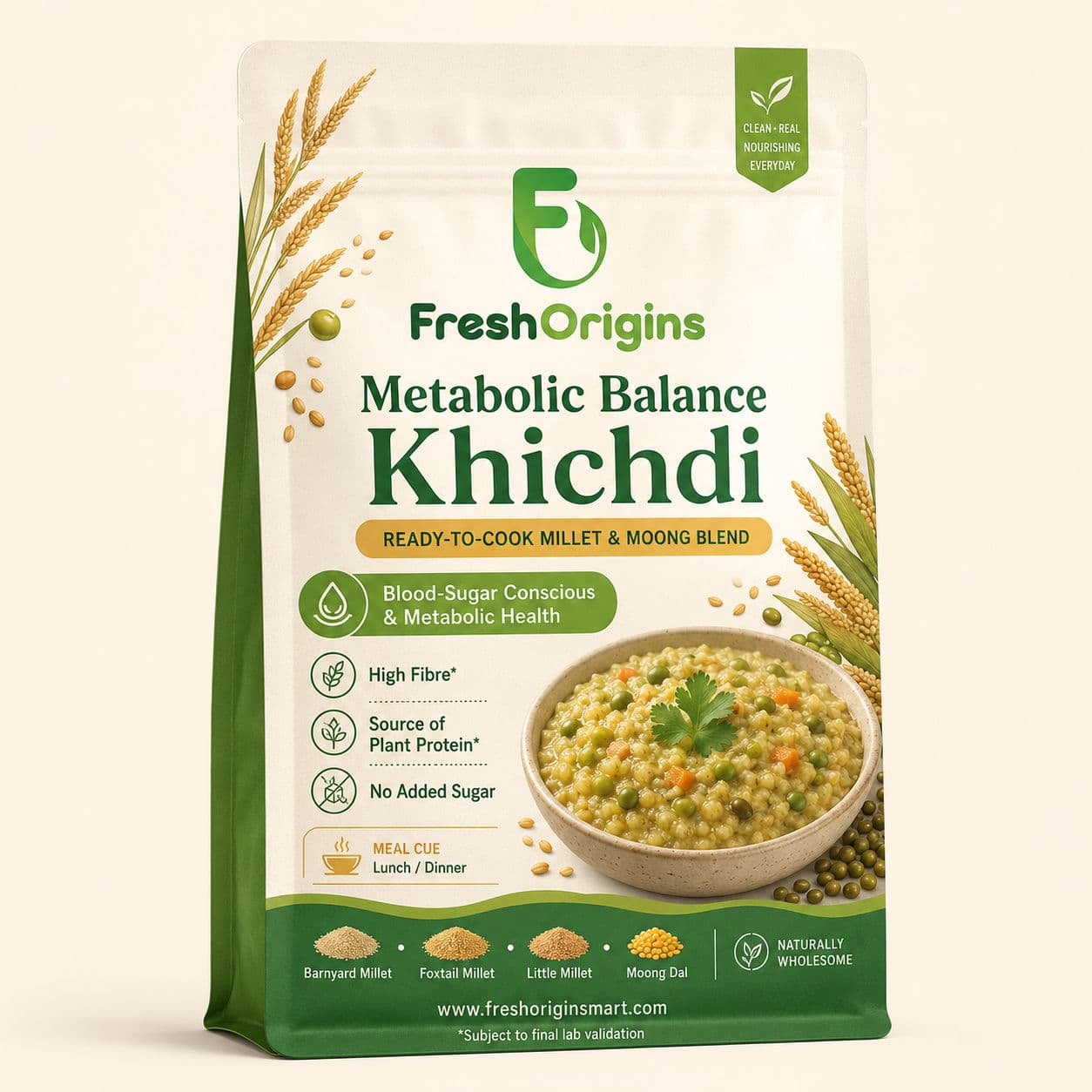
Millet and moong blend for an easy, fibre-forward meal. · 250 g
Best for: Families who want an easy, fibre-forward weeknight dinner, cooked just like regular khichdi.
₹135₹145
Questions
Yes — multi-millet flour is a time-honoured approach and balances flavour, nutrition, and roti texture. A common starting ratio is more jowar (for mildness), less bajra and ragi, adjusted to taste.
All three are high-fibre whole grains that digest slowly; differences between them matter far less than portion size and what accompanies the roti. Choose the one your household will actually eat regularly.
Tradition treats bajra as warming and favours it in winter, but there's no rule against eating it year-round in moderate quantities. Many households simply prefer lighter millets in peak summer.
Jowar, by most accounts. Blends that include some rice or pulse flour (like ours) get even closer in softness and rollability.