
Wheat-FreeNo Added Sugar
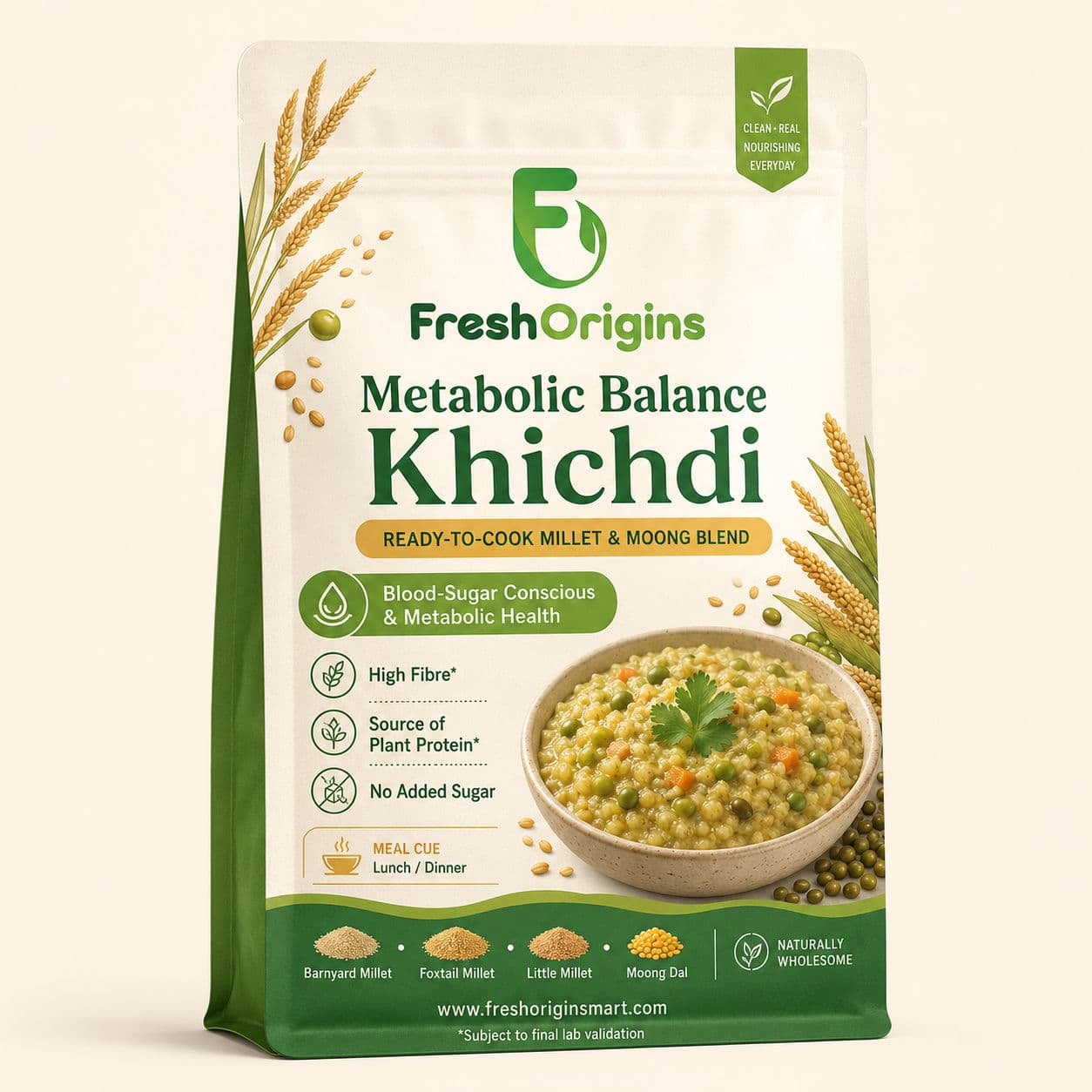
Metabolic Balance Khichdi
Millet and moong blend for an easy, fibre-forward meal. · 250 g
Best for: Families who want an easy, fibre-forward weeknight dinner, cooked just like regular khichdi.
₹135₹145
Comparison · Grains
Both millets and rice have fed Indian households for centuries — this is not a contest with a loser. But they behave differently on the plate and in the body, and the practical question is when to choose which. Here's an honest, number-backed comparison.
Millets generally bring more fibre, more protein, and more minerals per serving than polished white rice, and their higher fibre tends to make meals more filling. White rice wins on softness, cooking speed, and familiarity. For most households the answer is rotation, not replacement: keep rice in the week, and let millets carry two or three meals — or start with a 50:50 mix.
Side by side
| Millets (typical range) | White rice (polished) | |
|---|---|---|
| Dietary fibre (per 100 g raw) | ~8–12 g | ~1 g |
| Protein (per 100 g raw) | ~7–12 g | ~7 g |
| Minerals | Iron, calcium, magnesium vary by millet — ragi is notably high in calcium, bajra in iron | Modest after polishing |
| Glycaemic behaviour | Whole millets are digested more slowly, aided by fibre and intact structure | Digested quickly; polished grain raises glucose faster |
| Cooking time | ~15–25 min (soaking helps) | ~12–15 min |
| Taste & texture | Nutty, slightly coarse; each millet differs | Soft, neutral, universally familiar |
| Typical price (Bangalore retail) | ~₹80–200/kg | ~₹50–150/kg |
Values are approximate, per 100 g raw grain, compiled from published Indian food-composition data (IFCT). Cooked values differ with water ratio. Treat these as directional estimates, not label facts.
Fibre is the headline difference. Whole millets carry roughly eight to twelve times the fibre of polished white rice, and that fibre does real work: it slows digestion, adds bulk, and makes a meal hold you longer. If your lunches disappear by 4 pm, this is usually the lever to pull.
Minerals are the quieter win. Ragi (finger millet) is one of the richest everyday sources of calcium among grains; bajra (pearl millet) contributes meaningful iron; jowar and foxtail bring magnesium and B vitamins. Polishing strips much of this from white rice.
Millets are also naturally free of gluten — relevant if your household avoids wheat — though cross-contact depends on how they're processed, so check pack labels if this matters clinically.
Rice is soft, fast, and liked by everyone at the table — including toddlers, seniors, and anyone eating a gentle diet on a difficult stomach day. That is not nothing; a grain only helps if it actually gets eaten.
Traditional rice varieties change this comparison significantly. Unpolished red, brown, and black rice keep their bran layer, so their fibre and mineral numbers sit much closer to millets than to white rice. If your family won't move off rice, moving from polished white to a traditional variety is the single easiest upgrade — our Traditional Rice Variety Pack exists for exactly this.
Nutrition guidance in India consistently points the same way: diversify your grains rather than crowning one. A realistic week might look like rice three or four days (ideally a traditional variety some of those days), millets two or three days as khichdi, pongal, adai, or rotis, and a mixed pot on transition days.
If you're switching from years of white rice, go gradual — a sudden fibre jump can be hard on digestion. Start with a 50:50 millet-rice mix in familiar dishes, and read our step-by-step guide on switching from white rice to millets for a week-by-week plan.
The verdict
You want meals that keep you full longer, you're building a higher-fibre or blood-sugar-conscious eating pattern, or you want more minerals from the same plate.
You need speed, softness, or familiarity — and prefer unpolished traditional varieties (red, brown, black) to keep the nutrition upgrade even on rice days.
Rotate grains across the week, or use ready blends that pair millets with pulses so the swap needs zero new technique.
Put it into practice
Both delivered across Bangalore and Hosur — order online or complete your purchase on WhatsApp.
Millet and moong blend for an easy, fibre-forward meal. · 250 g
Best for: Families who want an easy, fibre-forward weeknight dinner, cooked just like regular khichdi.
₹135₹145
Red, black, and brown regional rice with origin and cooking ratio details. · 1 kg
₹190
Questions
For most people, yes — as part of a varied diet. Rotate different millets rather than eating one exclusively, drink enough water (fibre needs it), and increase quantity gradually. If you have a thyroid or kidney condition, discuss large daily amounts with your doctor.
They're nuttier and slightly coarser. In mixed dishes — khichdi, pongal, upma, adai — the difference is small, which is why blends are the easiest starting point. Plain millet 'rice' takes a little more getting used to.
Whole millets typically cost about the same as, or a little more than, mid-range rice — roughly ₹80–200/kg in Bangalore retail. Because millet meals tend to be more filling, per-meal cost often works out similar.
Meals that digest slowly and keep you satisfied tend to support weight management, and millets' fibre helps there. But the overall meal pattern — portions, vegetables, pulses, cooking fat — matters more than any single grain swap.
Generally yes, in well-cooked, soft formats like khichdi, porridge, and dosa — softer preparations are gentler for both groups. Introduce gradually. For specific medical conditions, check with your paediatrician or doctor.