
Traditional Rice — Variety Pack
Red, black, and brown regional rice with origin and cooking ratio details. · 1 kg
₹190
Comparison · Traditional Rice
These are usually the same species of rice at different levels of processing — the differences come mostly from what's been removed. White rice is fully polished; brown keeps its bran; traditional reds and blacks keep their bran and add pigments of their own. That one fact drives almost everything in the table below.
The less polished the rice, the more fibre and minerals survive. Red and brown rice are nutritionally close cousins — both keep the bran layer, giving them several times the fibre of white rice plus slower digestion; red rice adds anthocyanin-family pigments in its coat. White rice is softer and faster but nutritionally lightest. If your family is rice-first, moving even two or three meals a week from white to a traditional red, brown, or black variety is a meaningful upgrade with zero recipe changes.
Side by side
| White (polished) | Brown (unpolished) | Traditional red | |
|---|---|---|---|
| Bran layer | Removed | Intact | Intact + pigmented coat |
| Fibre (per 100 g raw) | ~1 g | ~3–4 g | ~3–5 g |
| Minerals (iron, magnesium, zinc) | Low after polishing | Substantially retained | Substantially retained |
| Digestion speed | Fast | Slower (bran + fibre) | Slower (bran + fibre) |
| Cook time | ~12–15 min | ~25–40 min (soak helps) | ~25–40 min (soak helps) |
| Taste & texture | Soft, neutral | Chewy, nutty | Chewy, earthy, distinctive |
| Shelf life | Long | Shorter (bran oils) — buy fresher, store airtight | Shorter — same care as brown |
Approximate values per 100 g raw, from published food-composition data; varietal variation is real (Kerala Matta, Mappillai Samba, and other heritage reds each differ). Black rice, a pigmented whole rice, behaves like red rice nutritionally with its own anthocyanin profile.
Rice bran carries most of the grain's fibre, oils, B vitamins, and minerals. Polishing it away yields the white rice most of India eats daily — softer and quicker, but nutritionally hollowed out. Brown, red, and black rices are 'whole' in the same sense millets are: nothing important has been milled off.
The intact bran also physically slows digestion, which is why unpolished rices sit better in a blood-sugar-conscious meal pattern than polished white — particularly when the plate also includes dal and vegetables.
The colour in red and black rice isn't cosmetic — it comes from polyphenol and anthocyanin pigments concentrated in the outer layers, the same family of compounds that colour berries. Heritage varieties like Kerala's Matta or Tamil Nadu's Mappillai Samba carry these along with their distinctive, satisfying taste.
Practically: red rice makes excellent everyday rice and kanji; black rice shines in porridges and even sweet preparations. Both reward a 20–30 minute soak before cooking.
Texture, not nutrition, is where switches fail. Unpolished rice is chewier, and expectations matter more than recipes. Start by blending — one part red or brown into two parts your usual rice — and shift the ratio over a few weeks. Pressure cooking with a little extra water softens traditional varieties considerably.
Our Traditional Rice Variety Pack includes red, black, and brown heritage rices with cooking ratios on the pack, so you can find your household's favourite before committing to full bags.
The verdict
Speed and softness are non-negotiable — and consider pairing it with dal and vegetables to slow the meal down.
You want the whole-grain upgrade with the most neutral flavour of the unpolished options.
You want bran-layer nutrition plus heritage-variety pigments and taste — the fullest version of what rice can be.
Put it into practice
The variety pack is the low-risk way to find which traditional rice your family actually enjoys.
Red, black, and brown regional rice with origin and cooking ratio details. · 1 kg
₹190
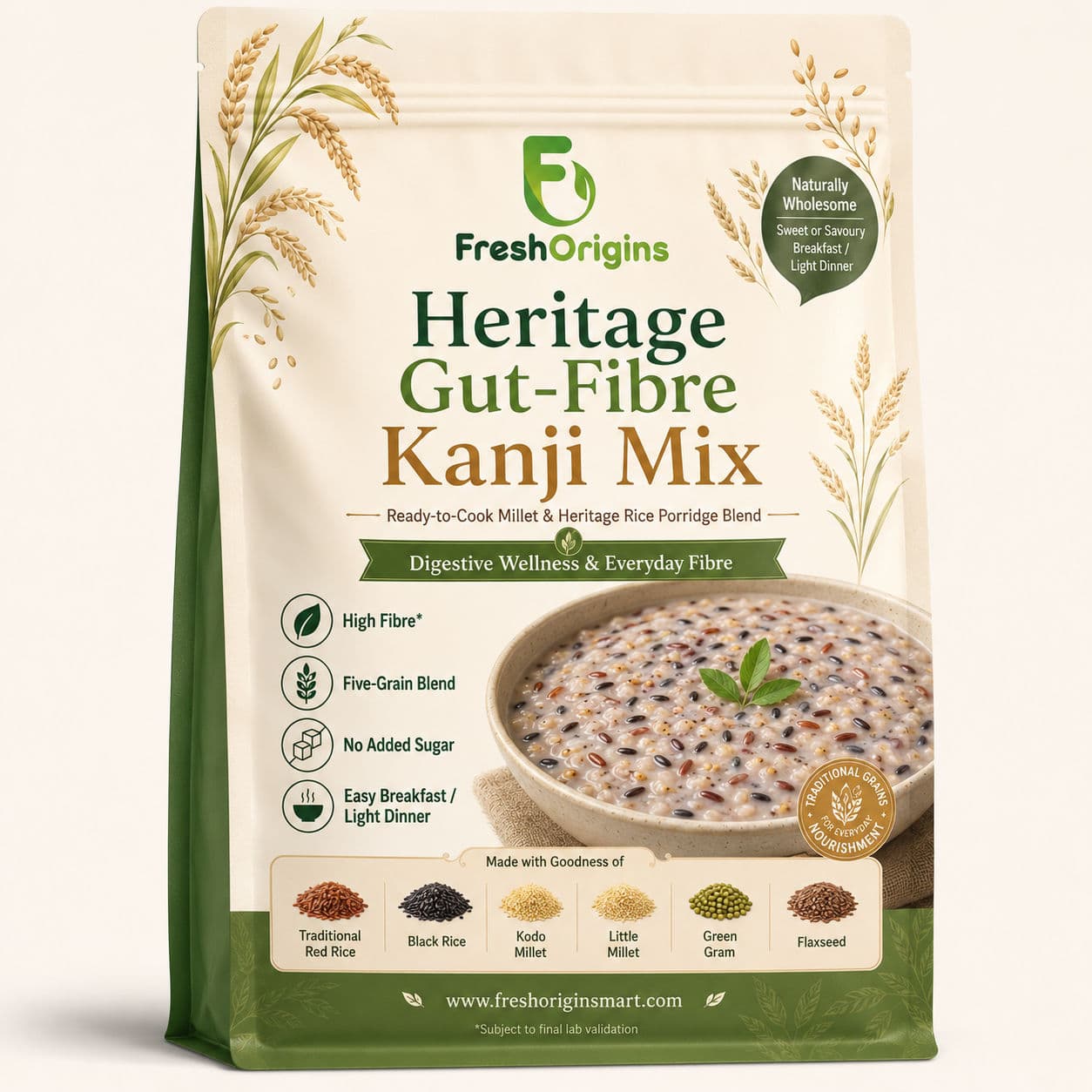
Red rice, black rice, millets, and green gram in a comforting porridge blend. · 250 g
Best for: Anyone wanting a gentle, comforting, fibre-forward meal — including senior-friendly diets.
₹155
Questions
They're close. Both keep the bran, so fibre and minerals are similar; red rice adds pigment compounds in its coloured coat. Choose by taste and availability rather than agonising over the difference.
The intact bran layer resists water. Soaking 20–30 minutes, using a bit more water, or pressure cooking closes most of the time gap.
The natural oils in bran can go rancid over months, so buy quantities you'll finish in 2–3 months and store airtight, away from heat. In hot kitchens, the fridge extends life.
No — it's simply the least nutrient-dense form. In a balanced plate with dal, vegetables, and curd, white rice has fed generations perfectly well. The point is that unpolished varieties give you more per spoonful, so shifting some meals over is an easy win.
Black rice is a pigmented whole rice — bran intact, with a deep anthocyanin colour that turns purple on cooking. Nutritionally it sits with red rice; treat it as a specialty rotation rice for porridges and festive dishes.