Red rice is one of India’s most enduring traditional grains, grown as regional landraces from the paddies of Kerala to the terraced fields of the Himalayan foothills and across the eastern and southern plains. Its warm reddish-brown colour comes from a natural pigment in the bran layer — the same part that is rubbed away when rice is polished into plain white rice. Keep that layer, and you keep the character: a nutty aroma, a firmer bite, and a fibre contribution that makes red rice feel more substantial on the plate. This is not a new health fashion. In many Indian households, red rice was simply the rice you grew, cooked, and ate, long before the word “heritage” was attached to it.
A grain with deep regional roots
Rice in India is not one thing but thousands of things. Farmers have selected and saved seed for generations, producing local landraces suited to their soil, rainfall, and cooking traditions. Red rice is one broad and beloved family within that diversity, defined by the reddish pigment carried in its bran.
In Kerala, the best-known example is matta rice — often called Palakkadan Matta or rosematta — a plump, russet-coloured rice that forms the backbone of everyday Kerala meals. It is the rice behind countless plates of kanji (rice gruel), the base for puttu and appam batters in many homes, and the sturdy grain served alongside sambar, aviyal, and fish curry. Its earthy colour and robust texture are so tied to the regional table that a Kerala meal without it can feel incomplete to those who grew up with it.
Red rice is far from a Kerala monopoly, though. Across the Western Ghats, in Karnataka, in Tamil Nadu, and up into the hills of the north and northeast, communities have long grown their own red landraces — some short-grained and quick to soften, others longer and chewier, some prized for aroma, others for the way they hold up in a labouring day’s meal. The point is not to memorise a catalogue of names but to appreciate that red rice is a living tradition of many varieties, each shaped by its region of origin. When we describe our rice as thoughtfully sourced and traditional, this is the heritage we mean.
The bran layer and what polishing removes
To understand why red rice looks, tastes, and cooks the way it does, it helps to picture the grain itself. Under the inedible outer husk sits the bran — several thin layers that wrap the starchy endosperm and the tiny germ. That bran is where the red pigment lives, and it is also where a good share of the grain’s dietary fibre sits.
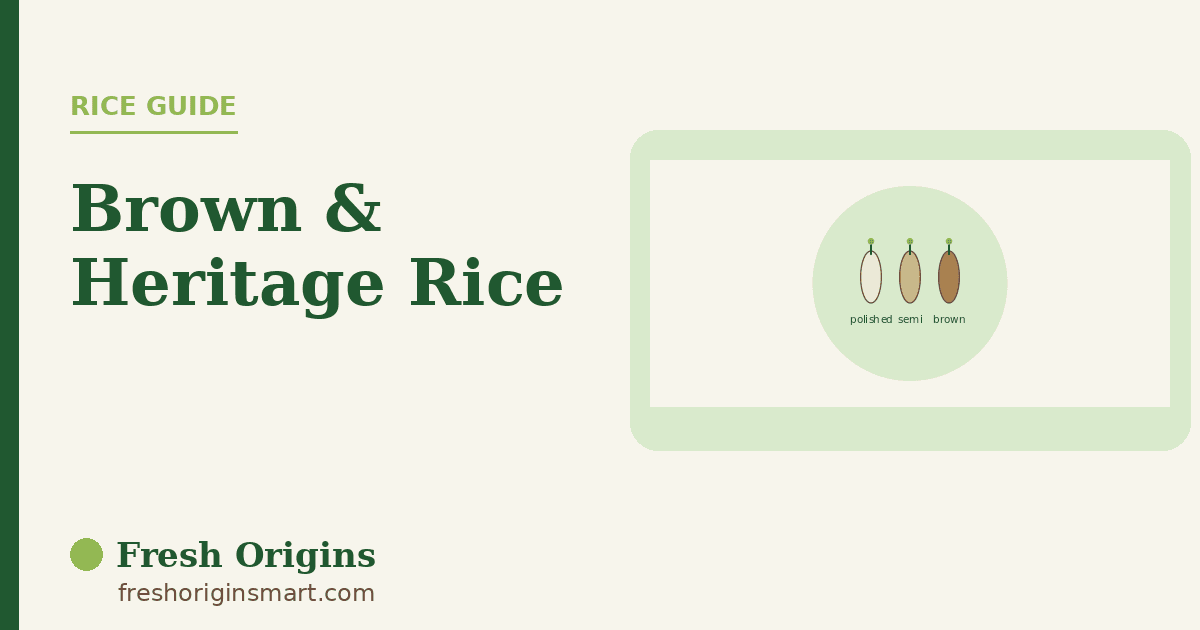
Milling always removes the husk, because it is not edible. Polishing is the extra step that rubs away the bran to leave the pale, soft, quick-cooking grain we know as white rice. Traditional red rice is left unpolished or only lightly polished, so most of that reddish bran stays put. Because the bran carries fibre, red rice contributes more dietary fibre to the plate than fully polished white rice as part of a whole-grain diet. This is a straightforward, factual difference in how the grain is processed — not a claim that red rice will do anything dramatic. It simply means that choosing a minimally processed grain is one easy way to support a fibre-rich diet.
None of this is a judgement on white rice. Polished rice is a staple for very good reasons: it cooks fast, keeps well, and is gentle and familiar. Red rice is not “better” in some moral sense; it is a different choice with a different texture and a different fibre contribution, and it is nice to have both in the kitchen.
Colour, texture, and aroma
Raw red rice ranges from a muted brick to a deep russet, sometimes with pale flecks where a little bran has worn away. Cooked, it holds much of that warm colour, giving a plate an earthy, appetising look rather than the blank white of polished rice. The aroma is gently nutty and grainy, a little like toasted cereal, without being strong or perfumed.
Texture is where red rice really announces itself. It is chewier and more distinct grain-to-grain than white rice, with a satisfying resistance to the bite. Cooked well, it is tender but never mushy, which is exactly why it shines in dishes where you want the rice to keep its shape — grain bowls, mixed rice preparations, and anything that has to sit for a while without collapsing.
How to cook red rice
Red rice takes longer to cook than white rice and rewards a little planning. The bran layer that gives it character also slows down how quickly water gets in, so soaking and a generous pot of water make all the difference.
A reliable everyday method:
- Rinse the rice in a couple of changes of water until it runs mostly clear.
- Soak for 30 to 60 minutes. This softens the bran and shortens the cooking time. If you forget, you can skip it, but expect a longer cook and a firmer grain.
- Cook with plenty of water — roughly 1 part rice to 2.5–3 parts water for the open-pot method. Bring to a boil, then simmer gently.
- Judge by the grain, not the clock. Depending on the variety and how lightly it was polished, red rice may take anywhere from 25 to 45 minutes. It is done when the grains are tender but still have a pleasant chew at the centre — soft enough to enjoy, firm enough to hold their shape.
- Rest and drain. If you cooked it in excess water, drain the surplus; a short rest off the heat lets the grains settle.
In a pressure cooker, use a little less water (around 1:2 to 1:2.5 after soaking) and give it a few whistles, then let the pressure release naturally. Every landrace behaves slightly differently, so treat your first pot as a calibration and adjust water and time to your taste after that.
Storing and buying well
Because red rice keeps its bran, it carries a little more natural oil than polished rice, which means it is best treated as a fresher product rather than something that sits open for a year. Store it in a clean, airtight container away from heat and direct light. A cool, dry cupboard is fine; in very warm or humid conditions, or if you buy in bulk and use it slowly, the refrigerator or freezer helps keep it at its best. Well-kept red rice should smell clean and grainy — a sharp or stale, oily smell is a sign it has been stored too long or too warm.
When buying, a few simple cues help you judge quality:
- Colour tells you about polishing. Deep, even russet grains suggest the bran is largely intact. If the rice looks pale with only a faint blush of red, it has likely been polished more heavily, which means less bran and less of the fibre and texture you came for.
- Look for consistency. A little natural variation is normal in a traditional grain, but the rice should look clean and reasonably uniform, without excessive broken grains, grit, or debris.
- Prefer freshness cues over vague labels. Words like “heritage” are only as meaningful as the grain in the bag. Buying from a source that tells you the variety and region of origin, and that moves stock quickly, is the most dependable way to get red rice in good condition.
Everyday cooking and traditional dishes
Red rice slots into Indian home cooking with almost no learning curve, because it does everything plain rice does — it just brings more colour, chew, and fibre along.
For everyday meals, serve it exactly as you would white rice: with dal and a vegetable, with sambar and a dry poriyal, or alongside a curry with a spoon of ghee or pickle. Its firmer grain makes it especially good for a curd-rice-style bowl, where the rice is cooled and folded with curd, a tempering of mustard seeds and curry leaves, and perhaps a little grated ginger or pomegranate.
A few ideas to build a week around:
- Red rice kanji. Cook red rice soft with extra water into a comforting gruel; season simply with salt and a little coconut, or keep it plain as a gentle everyday meal.
- Red rice grain bowl. Spoon cooked red rice into a bowl, top with a stir-fried vegetable, a scoop of dal or sprouted moong, and something fresh like sliced onion, coriander, and lemon. It is a blood-sugar-conscious meal-planning idea that leans on fibre-rich whole grains and vegetables without asking you to give up a familiar plate of rice.
- Red rice with dal and greens. A simple thali of red rice, a soupy dal, a sautéed leafy vegetable, and curd makes a balanced, satisfying meal.
- Red rice in sweets. In parts of India, red and other unpolished rices find their way into traditional sweet preparations and puddings, where their nutty depth pairs nicely with jaggery and coconut. Cook the rice a little softer than usual for these.
Because it holds its shape and reheats well, red rice is a natural for cooking once and eating across a few meals — a practical habit for busy weeks.
Who might find it useful
Red rice suits anyone who enjoys a heartier, nuttier grain and wants an easy way to bring more fibre into everyday eating as part of a whole-grain diet. If you like meals that keep you comfortably full and you appreciate texture, it is a natural fit. People approaching meals with blood-sugar-conscious meal planning in mind often like having a fibre-rich whole grain in the rotation, though how any individual responds to any food varies and is best discussed with a qualified professional. None of this is a promise about outcomes — it is simply a description of a traditional grain and the role it can play in a varied diet.
How it fits Fresh Origins blends
Traditional red rice runs through our range, where its heritage colour, texture, and fibre earn their place. It brings body and a nutty depth to our Protein & Fibre Adai Mix, sits at the heart of our Heritage Gut-Fibre Kanji Mix alongside millets and pulses, and helps with dough handling and character in our Gluten-Free Protein & Fibre Roti Mix. In each, red rice is doing what it has always done in Indian kitchens — adding substance and everyday nutrition to a familiar staple. It is, in the simplest terms, a thoughtful step up from plain polished rice, not a reinvention of it.
Frequently asked questions
Is red rice the same as brown rice? Not quite. Both keep their bran rather than being fully polished, so both contribute more fibre than white rice as part of a whole-grain diet. The difference is the pigment: red rice carries a natural red colour in its bran, while brown rice has the more familiar tan bran. They cook similarly and can often be used in the same ways.
Why does my red rice take so long to cook? The intact bran slows how quickly water reaches the starchy centre. Soaking for 30–60 minutes and using plenty of water shortens the cook considerably. Less-polished, deeper-coloured rice will generally take longer than a lightly polished grain, so let the texture, not the timer, tell you when it is done.
Is red rice healthier than white rice? It is more accurate to say it is different. Red rice contributes more dietary fibre because it keeps its bran, which can support a fibre-rich diet. White rice remains a perfectly good staple. This is about variety and texture, not about one grain being virtuous and another not.
Does the red colour wash out or bleed? A faint tint in the rinsing or cooking water is normal, because the colour comes from natural pigment in the bran. It is not a sign of anything wrong. The cooked grains keep most of their warm russet colour.
How should I store it once opened? Keep it in an airtight container in a cool, dry place. Because it retains more natural oil than polished rice, using it within a reasonable time and refrigerating or freezing in hot, humid conditions helps keep it fresh and smelling clean.