
Gluten-FreeNo Added Sugar
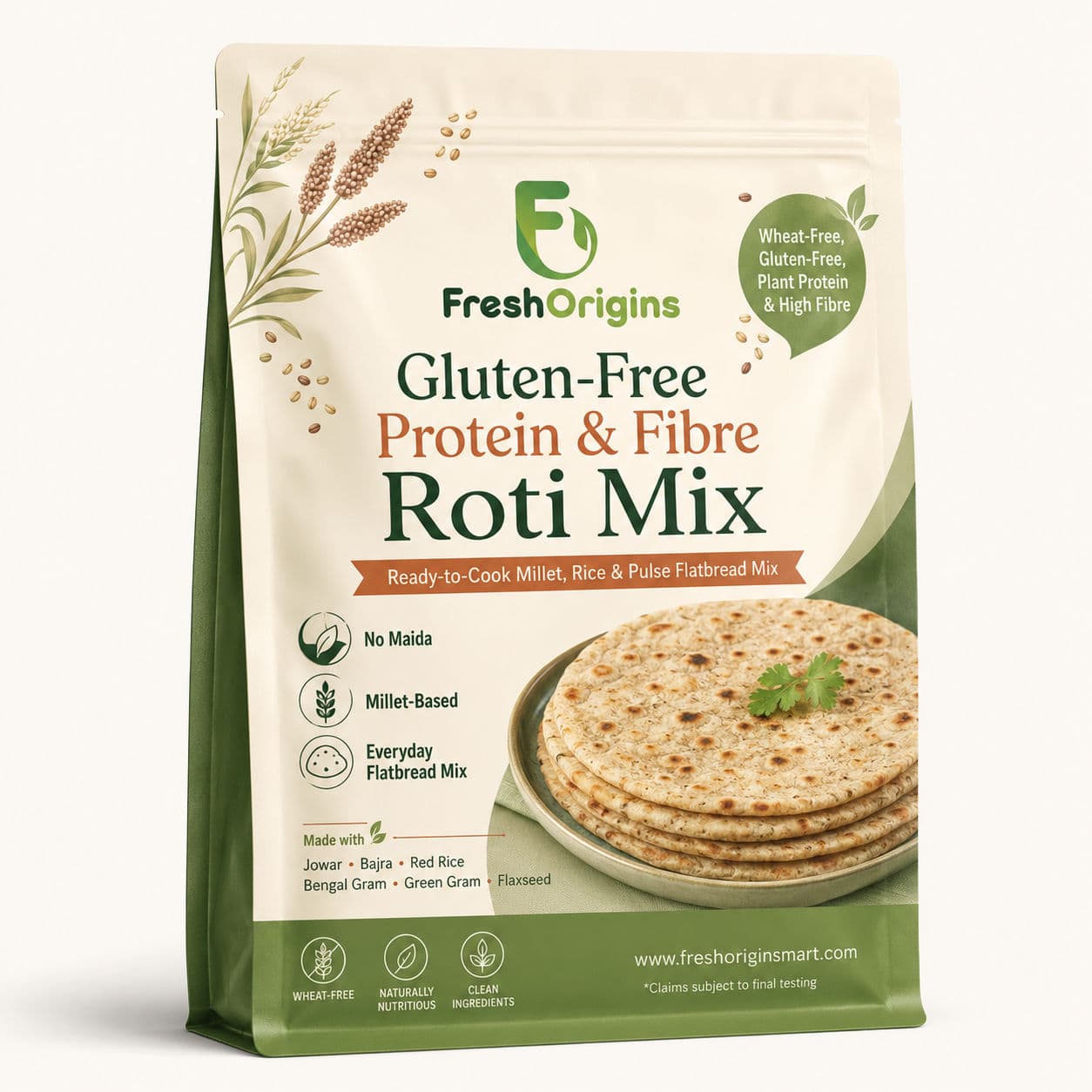
Gluten-Free Protein & Fibre Roti Mix
Wheat-free millet, rice, and pulse flour blend for everyday flatbreads. · 500 g
Best for: People choosing wheat-free or gluten-free* flatbreads without giving up everyday rotis.
₹285
Buying guide · Gluten-free
Anyone who has watched a pure jowar roti crack at the edges knows the problem: gluten is the stretchy protein that makes wheat rotis forgiving, and gluten-free flours don't have it. The fix is choosing the right flour — usually the right blend — and a couple of technique changes. Here's the full picture.
For gluten-free rotis, blends beat single flours. Jowar is the best single-flour starting point (mild, workable with hot-water dough); bajra and ragi bring nutrition but need blending for softness; rice flour adds bind and pliability to any mix. A good blend — millet flours for nutrition, rice flour for workability, pulse flour for protein — rolls closest to a wheat roti. Hot-water dough and immediate rolling are the two technique tricks that change everything.
The list
Mildest taste and the most forgiving texture among millet flours; jowar bhakri is a whole cuisine's proof that it works alone.
Use it: Knead with hot water, roll between sheets or with gentle patting, cook immediately.
Top-tier iron and fibre; its stiffer dough and robust taste suit winter rotis and pair well with jaggery-ghee.
Use it: Hot-water dough, pat rather than roll thin, best eaten fresh off the tawa.
Exceptional calcium (~344 mg/100 g) and strong earthy taste; pure ragi rotis are dense, so it performs best at 25–40% of a blend.
Use it: Blend with jowar and rice flour; also superb in dosa and porridge where texture is no issue.
Nutritionally modest but structurally vital: rice flour binds and softens gluten-free dough, which is why traditional GF flatbreads across India lean on it.
Use it: 20–30% of any millet blend transforms rollability.
Chickpea and other pulse flours add protein, bind well, and round out the amino-acid profile of millet blends.
Use it: 10–20% of a blend; also the base of cheela-style GF flatbreads.
Hot-water dough is the single biggest upgrade: boiling or very hot water partially cooks the starches as you knead, giving gluten-free dough the cohesion gluten would have provided. Knead while warm, keep the dough covered, and work in small batches.
Roll immediately and cook immediately — GF dough dries and cracks with every idle minute. Rolling between two sheets of plastic or parchment, or hand-patting bhakri-style, prevents the sticking-and-tearing cycle. A slightly thicker roti than wheat-standard is normal and pleasant.
Millets and rice are naturally free of gluten, but flours can pick up traces in mills and facilities that also handle wheat. If gluten avoidance is medical (coeliac disease or diagnosed sensitivity), buy flours and blends that state their facility practices — our packs declare allergen and facility information plainly, in line with our claim-governance rules — and check labels rather than assuming.
If you're simply reducing wheat by preference, standard millet flours from a trusted source are fine, and the blend guidance above is all you need.
Put it into practice
Our roti mix is exactly the blend this guide describes — millet flours for nutrition, rice flour for rollability, pulse flour for protein — validated gluten-free and delivered across Bangalore and Hosur.
Wheat-free millet, rice, and pulse flour blend for everyday flatbreads. · 500 g
Best for: People choosing wheat-free or gluten-free* flatbreads without giving up everyday rotis.
₹285
Questions
Jowar alone comes closest among single flours; a jowar-rice-pulse blend comes closer still in both taste and softness.
No gluten means no stretch. Use hot-water dough, roll between sheets, keep dough covered and warm, and cook each roti as soon as it's rolled. Blends with rice flour are markedly more forgiving.
The grain is; the flour depends on milling practices. For medical gluten avoidance, choose products with explicit gluten-free validation and facility disclosure.
Yes — fermented or spiced batters are actually the easiest gluten-free formats, since spreading a batter needs no gluten at all. Ragi dosa and besan cheela are excellent entry points.