
Wheat-FreeNo Added Sugar
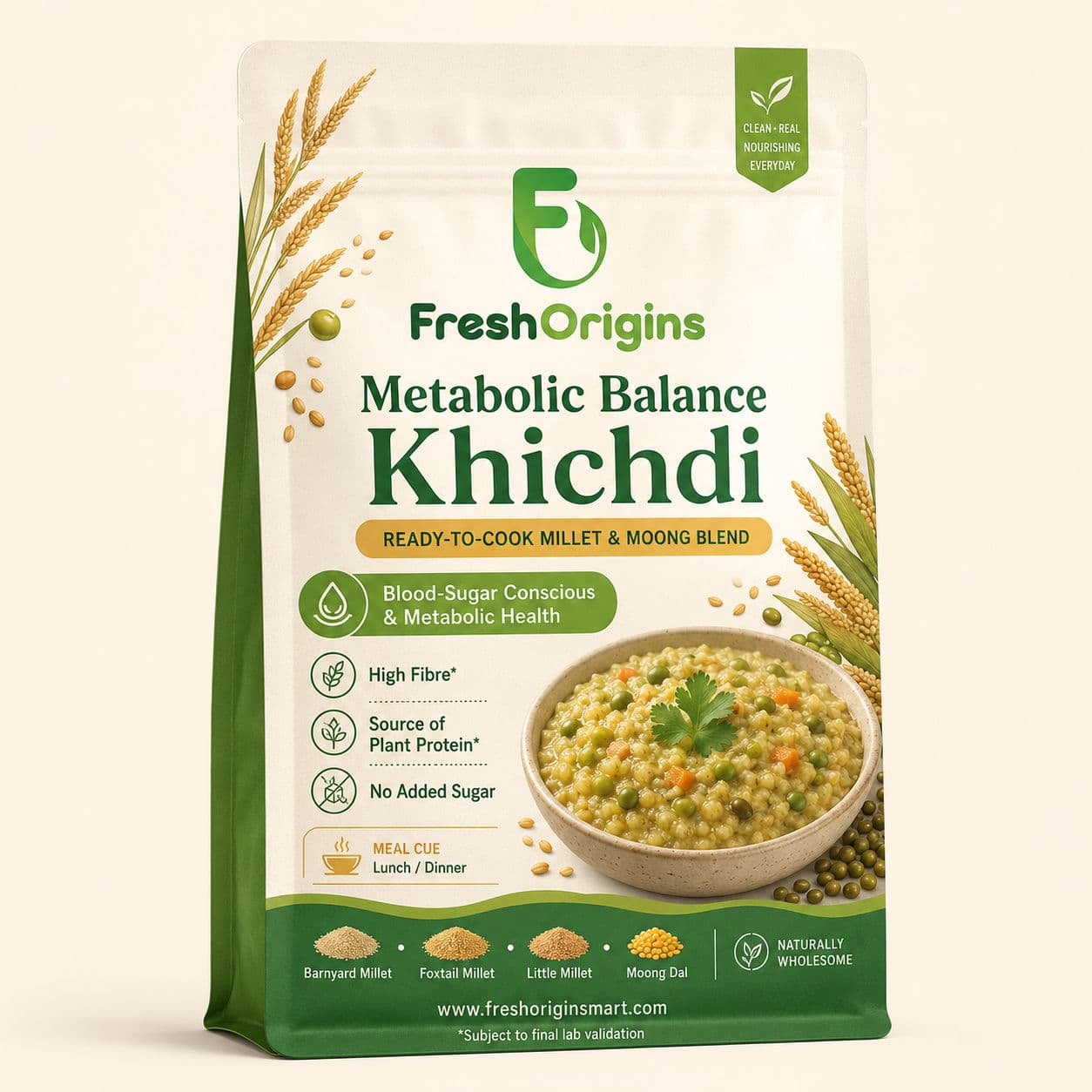
Metabolic Balance Khichdi
Millet and moong blend for an easy, fibre-forward meal. · 250 g
Best for: Families who want an easy, fibre-forward weeknight dinner, cooked just like regular khichdi.
₹135₹145
Buying guide · Getting started
Most millet journeys fail the same way: an enthusiastic kilo of the wrong millet, one coarse and unfamiliar meal, a family verdict, and a packet gathering dust. The fix isn't more willpower — it's picking beginner-friendly millets and introducing them where they're invisible. Here's the sequence that works.
Start with barnyard or little millet in a 50:50 blend with your usual rice — they're the softest and most neutral. Add jowar rotis (or a multi-grain roti blend) in week two. Save distinctive-tasting bajra and ragi for when the household is already convinced. Blends and mixed dishes — khichdi, pongal, upma — hide the transition far better than plain millet 'rice', which is exactly why ready millet-pulse blends are the lowest-risk first purchase.
The list
Softest texture, mildest flavour — at 50:50 with regular rice in khichdi or curd-rice formats, most families don't notice the change.
Use it: Rinse, soak 15–20 minutes, cook with your rice. Shift toward 100% millet as acceptance grows.
The mildest millet flour, and rotis are where whole-grain swaps stick — one meal slot, big fibre difference.
Use it: A multi-grain roti mix rolls and puffs more forgivingly than pure jowar flour for first-timers.
The classic 'serious' millet — nutty, satisfying, and the natural next step once soft millets are routine.
Use it: Foxtail pongal with pepper and ghee is the beginner recipe with the highest hit rate.
Both are exceptional grains with distinctive tastes — better introduced through their signature dishes than forced early.
Use it: Ragi as morning porridge or dosa; bajra as winter rotis with jaggery and ghee.
One: starting with the strongest-tasting millet (usually bajra or ragi) as plain 'rice' on day one. Two: cooking millets without rinsing and soaking, which leaves them coarse. Three: switching 100% overnight — the fibre jump can bloat an unaccustomed gut, which reads as 'millets don't suit us'. Four: buying big bags before tastes are known. Five: judging millets by a millet biscuit.
Every one of these has the same cure: go gradual, go blended, go where millets are traditional. Our full week-by-week walkthrough lives in the Learn section if you want the detailed version.
If you want ingredients: a half-kilo each of barnyard or little millet and jowar flour covers the first month. If you want the lowest-friction start, a ready millet-pulse blend — khichdi or adai — removes soaking ratios and recipe risk entirely: you cook it like the dish you already know, and the grain transition happens inside it.
Either way, buy small, buy fresh (millets are best within a few months of milling), and store airtight. In Bangalore and Hosur, we deliver both routes to your door.
Put it into practice
All three blends were designed as first-millet-purchase products: familiar dishes, grain-plus-pulse nutrition, no technique required.
Millet and moong blend for an easy, fibre-forward meal. · 250 g
Best for: Families who want an easy, fibre-forward weeknight dinner, cooked just like regular khichdi.
₹135₹145
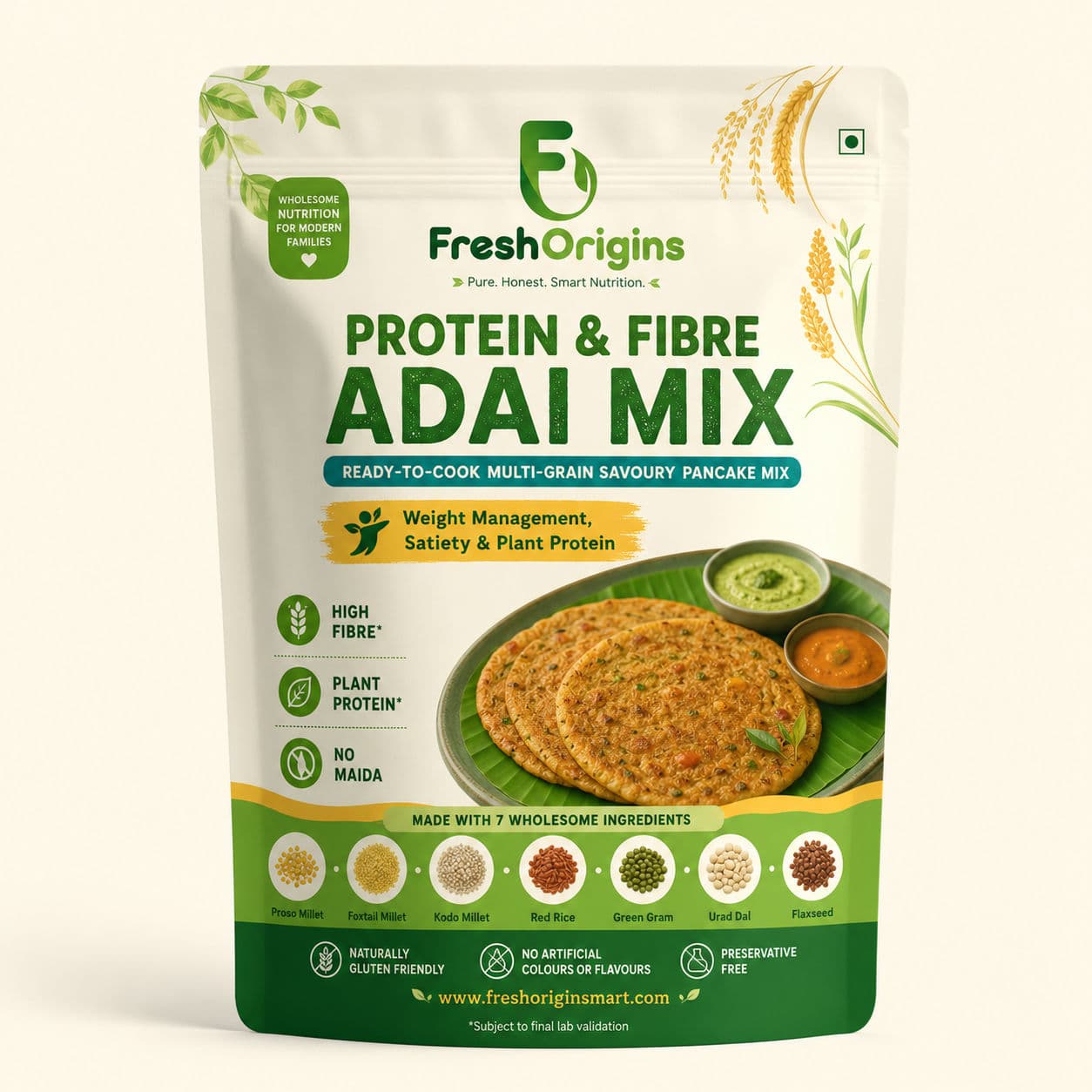
Multi-grain savoury pancake mix with millets, pulses, and flaxseed. · 250 g
Best for: Protein-conscious households wanting a savoury, pulse-rich breakfast or tiffin.
₹140
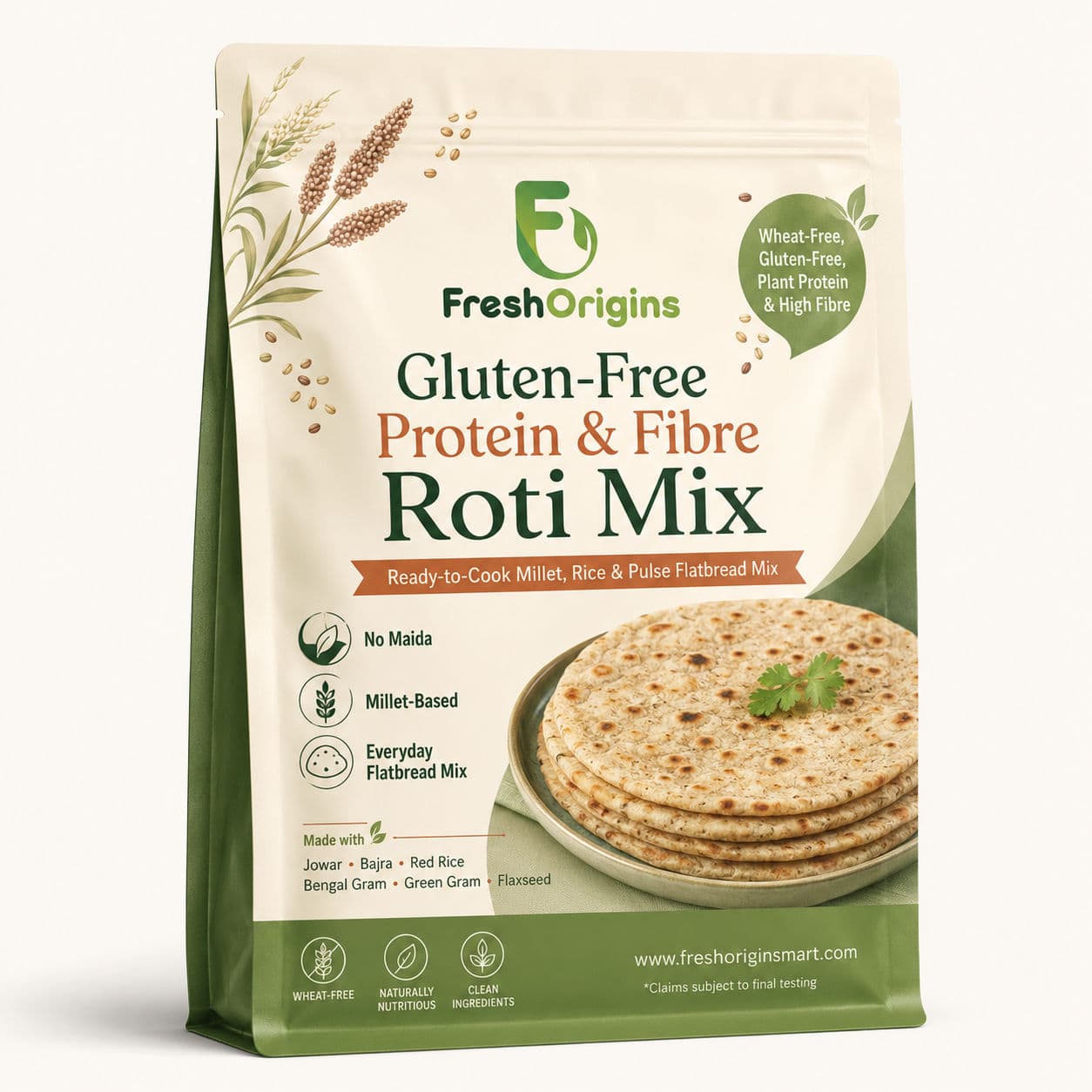
Wheat-free millet, rice, and pulse flour blend for everyday flatbreads. · 500 g
Best for: People choosing wheat-free or gluten-free* flatbreads without giving up everyday rotis.
₹285
Questions
Barnyard or little millet — softest texture, most neutral taste, easiest blending into rice dishes. Jowar flour if your household is roti-first.
A sudden fibre increase can, for anyone unaccustomed. Increase gradually over 2–4 weeks, soak before cooking, and drink more water — for most people this settles as the gut adapts.
Rinse well, soak 15–30 minutes, use about 2.5 parts water to 1 part millet, and let them rest covered after cooking. Pressure cooking makes everything more forgiving.
Soft, well-cooked formats (porridge, khichdi) are traditional weaning foods in many Indian regions — ragi especially. Introduce like any new food, and take paediatric advice for infants.