
Wheat-FreeNo Added Sugar
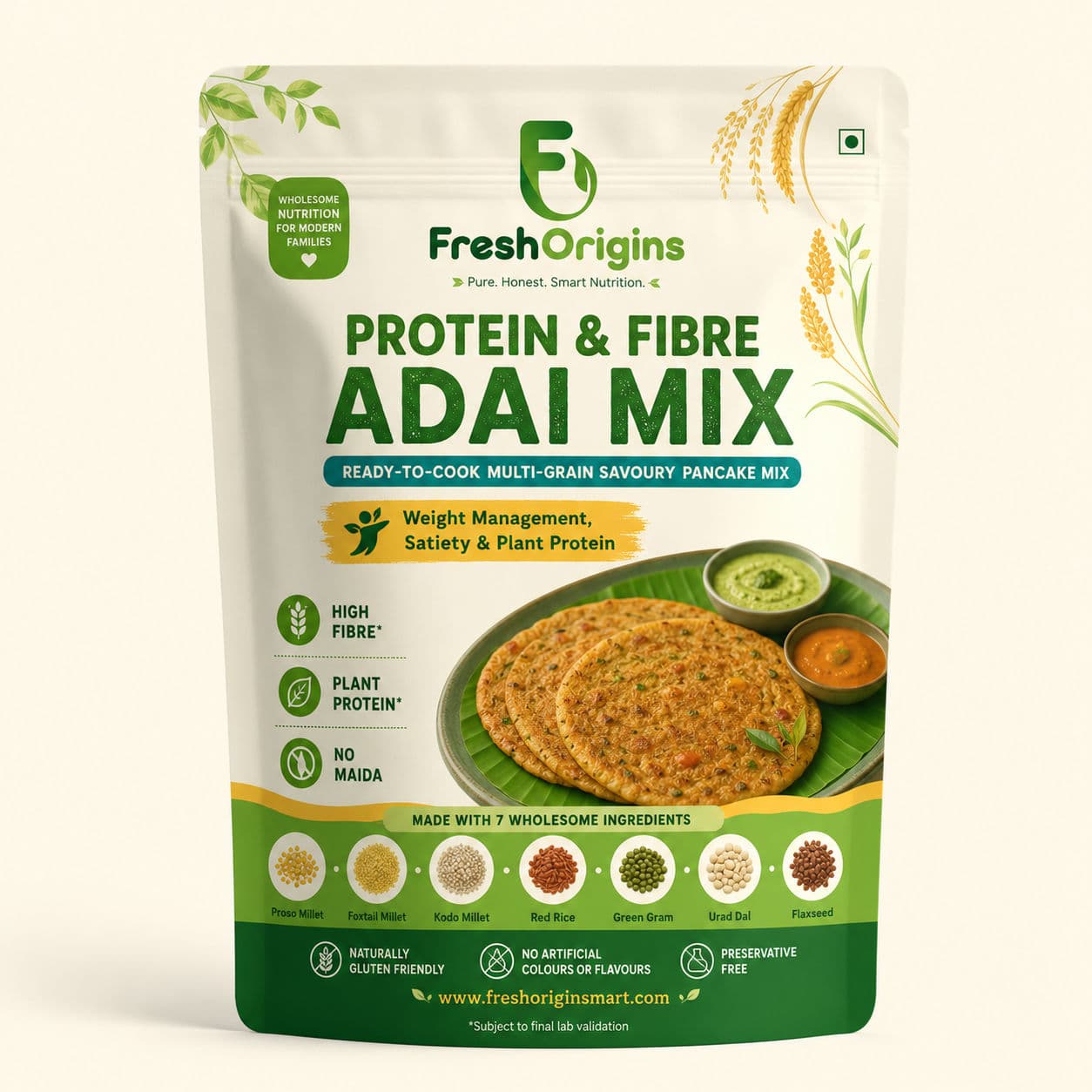
Protein & Fibre Adai Mix
Multi-grain savoury pancake mix with millets, pulses, and flaxseed. · 250 g
Best for: Protein-conscious households wanting a savoury, pulse-rich breakfast or tiffin.
₹140
Comparison · Grains
Quinoa earned its reputation honestly — it's a genuinely nutritious seed. The question for an Indian kitchen isn't whether quinoa is good, but whether it's meaningfully better than millets that cost a third as much and were bred for this land and this cuisine. Numbers first, verdict after.
Nutritionally, quinoa and millets are far closer than the price gap suggests. Quinoa edges ahead on protein completeness (all nine essential amino acids); millets like foxtail and bajra match or beat it on fibre and minerals, cost roughly one-third to one-fifth as much, and slot into Indian dishes without recipe surgery. If you enjoy quinoa, keep it. If you're choosing one for everyday Indian meals, millets — especially paired with dal — are the smarter default.
Side by side
| Foxtail millet | Bajra (pearl millet) | Quinoa | |
|---|---|---|---|
| Protein (per 100 g raw) | ~12 g | ~11 g | ~14 g |
| Fibre (per 100 g raw) | ~8 g | ~11 g | ~7 g |
| Protein quality | Limiting in lysine — completed by pairing with dal | Limiting in lysine — completed by pairing with dal | Complete (all essential amino acids) |
| Iron | ~2.8 mg | ~8 mg | ~4.6 mg |
| Typical Indian retail price | ~₹100–180/kg | ~₹80–150/kg | ~₹400–900/kg |
| Food miles | Grown in Karnataka & neighbouring states | Grown across India | Mostly imported (South America) or niche Indian cultivation |
| Fits Indian cooking? | Naturally — pongal, upma, 'rice' | Naturally — rotis, khichdi | Adapted — salads, pulao-style |
Approximate values per 100 g raw, compiled from published food-composition data (IFCT and USDA). Prices are typical Bangalore retail ranges and vary by brand and season.
Quinoa's real advantage is protein completeness: it carries all nine essential amino acids in useful amounts, which is rare in the plant world. Millets, like most cereals, are limiting in lysine.
But Indian cuisine solved this problem generations before the word 'amino acid' existed. Pulses are rich in exactly the lysine that grains lack — so dal-and-millet, adai, khichdi, and pongal deliver complete protein as a matter of course. Judge the meal, not the isolated grain, and the gap effectively closes.
Imported quinoa typically retails between ₹400 and ₹900 per kilo in Indian metros; foxtail millet sits around ₹100–180. For a family cooking a grain base five times a week, that difference compounds into thousands of rupees a year for — as the table shows — broadly comparable nutrition.
There's also a sourcing argument. Millets are rainfed, low-water crops grown by dryland farmers in Karnataka and neighbouring states; buying them supports regional agriculture and keeps food miles short. Quinoa's journey to your plate is usually intercontinental.
None of this makes quinoa a mistake. It cooks fast, works beautifully in salads and grain bowls, and its complete protein is convenient if your meals don't reliably include pulses. If that's your eating pattern, quinoa earns its price.
For everyday Indian cooking, though — where dal is already on the table and the grain needs to behave like rice or flour — millets do the job natively, at local prices, with flavours the household already recognises.
The verdict
You're cooking Indian meals with pulses in the rotation, you care about cost per meal, or you want to buy regional and low-water. This is the everyday default.
You want a fast, complete-protein base for salads and bowls, or your meals often skip dal and you want the amino-acid insurance.
Grain + pulse beats grain alone. That's the actual nutrition headline, whichever seed you pick.
Put it into practice
Our blends pair millets with pulses precisely for protein completeness — the quinoa question, answered the Indian way.
Multi-grain savoury pancake mix with millets, pulses, and flaxseed. · 250 g
Best for: Protein-conscious households wanting a savoury, pulse-rich breakfast or tiffin.
₹140
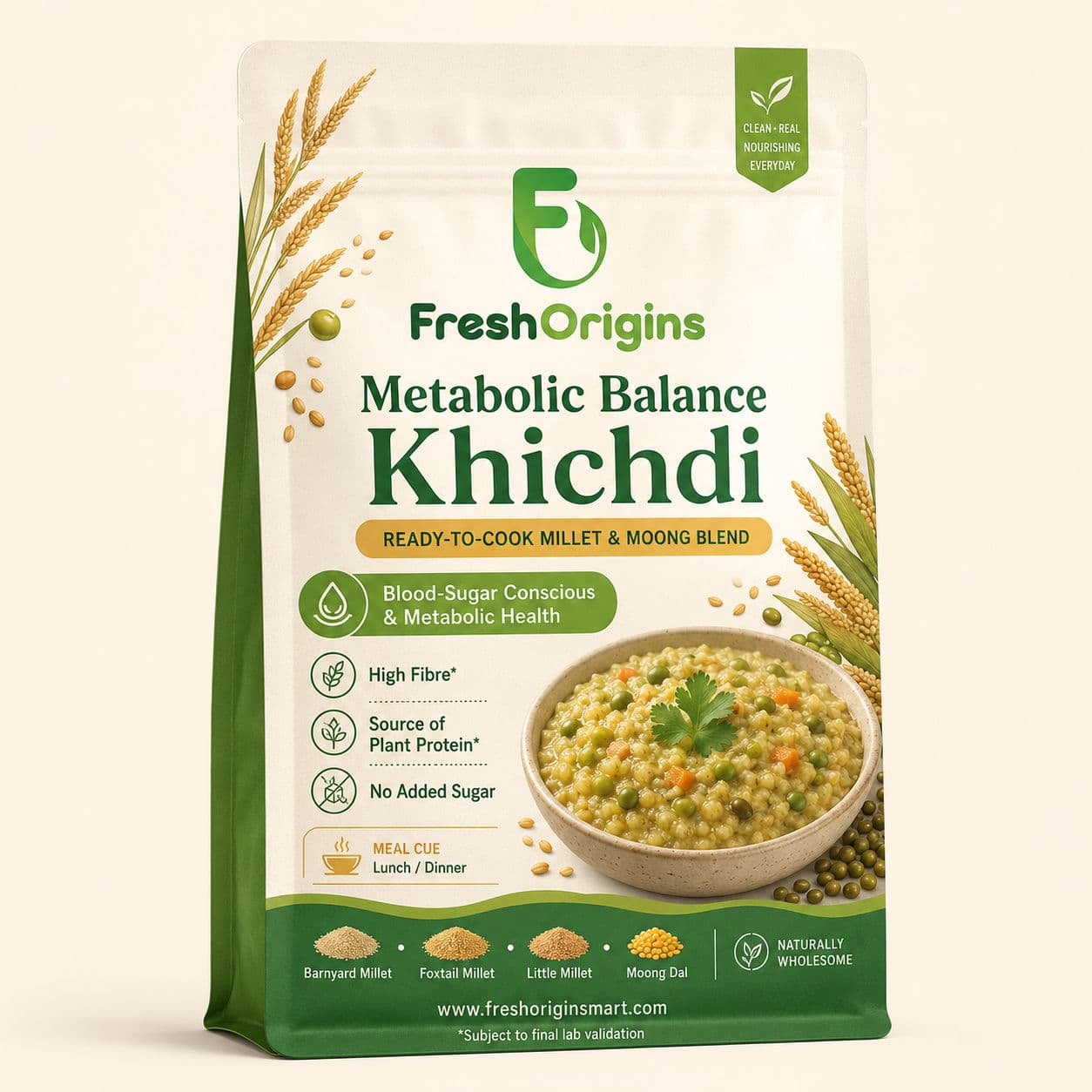
Millet and moong blend for an easy, fibre-forward meal. · 250 g
Best for: Families who want an easy, fibre-forward weeknight dinner, cooked just like regular khichdi.
₹135₹145
Questions
Not meaningfully, for most purposes. Quinoa has more complete protein; several millets have more fibre and iron. In an Indian diet where grains are eaten with pulses, the practical nutrition of the full meal is very similar.
Foxtail millet is the usual comparison — similar protein, similar cooking behaviour, and it works in most recipes that call for quinoa, at a fraction of the price.
Some is now cultivated in Rajasthan, Andhra Pradesh, and other states, but most supermarket quinoa is still imported. Millets, by contrast, are grown at scale across the Deccan, including Karnataka.
Either works — the key is pairing grains with pulses, dairy, nuts, or seeds across the day. A millet-pulse dish like adai or khichdi delivers complete protein without needing quinoa at all.