
Wheat-FreeNo Added Sugar
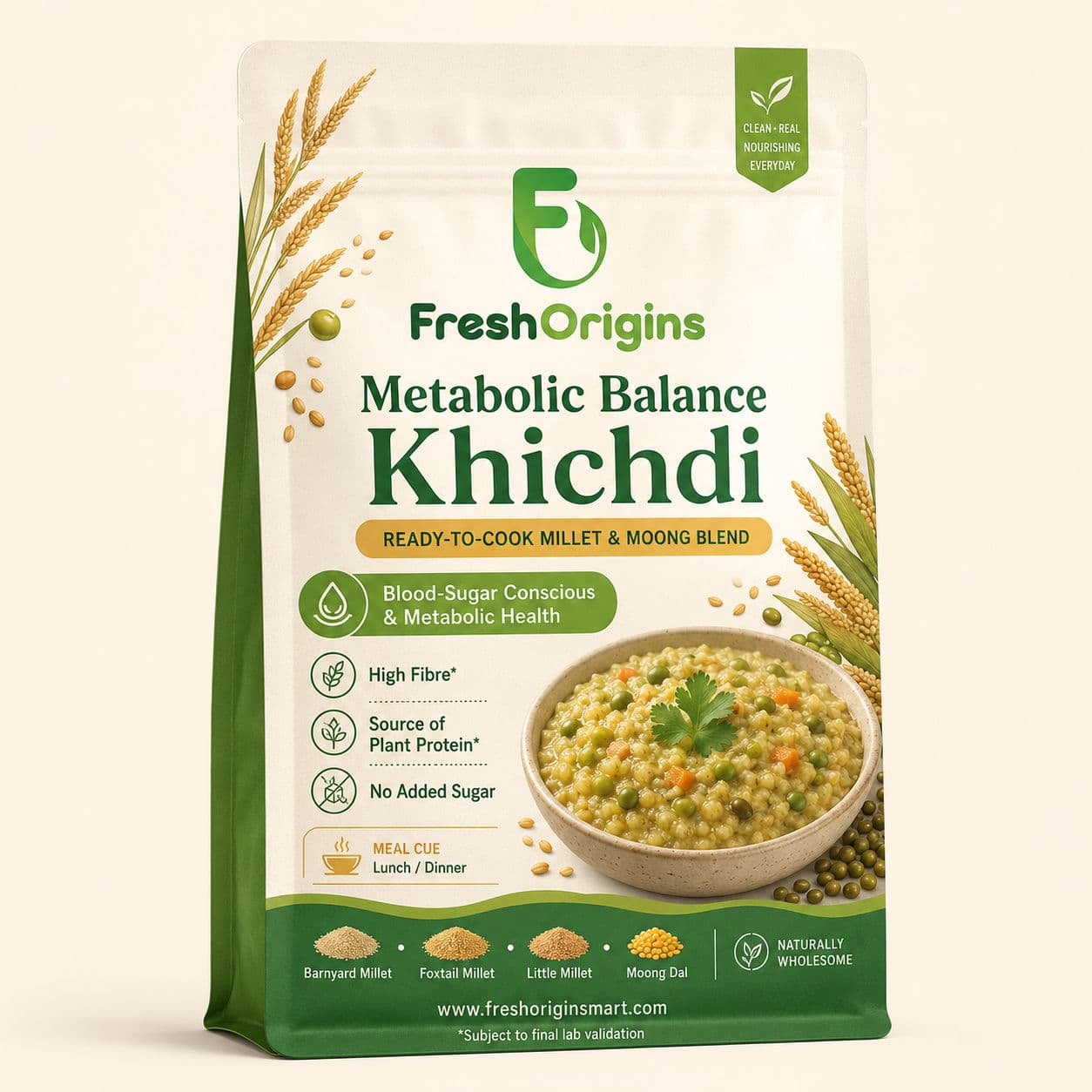
Metabolic Balance Khichdi
Millet and moong blend for an easy, fibre-forward meal. · 250 g
Best for: Families who want an easy, fibre-forward weeknight dinner, cooked just like regular khichdi.
₹135₹145
Buying guide · Everyday nutrition
The honest mechanism first: no grain burns fat. What high-fibre grains actually do is make meals more filling per calorie, digest slowly, and quiet the 4 pm snack pull — and that, sustained over months, is what supports weight management. Millets are unusually good at exactly this.
For satiety per rupee, millets are hard to beat: their fibre (8–12 g per 100 g, versus ~1 g in white rice) slows digestion and keeps meals with you longer. Bajra and jowar lead for filling rotis; foxtail and little millet make satisfying rice-replacers; ragi porridge makes a breakfast that actually lasts till lunch. Pair them with dal and vegetables, watch cooking fat, and treat the swap as one steady habit — not a crash plan.
The list
A fibre-and-protein breakfast blunts mid-morning hunger better than refined options — ragi's ~11 g fibre plus adai's pulse protein are the workhorses here.
Use it: Savoury ragi porridge with buttermilk, or adai from a millet-pulse batter with chutney.
Swapping polished rice for whole foxtail or little millet keeps the plate identical while multiplying its fibre several-fold — the highest-leverage single change for rice-first eaters.
Use it: Cook like rice (1:2.5 water), serve with your usual dal and sabzi.
One-pot, gentle, and complete — grain-plus-pulse khichdi delivers protein and fibre together, which is the satiety combination that works.
Use it: A ready blend removes the weeknight friction that kills good habits.
Dense, chewy millet rotis take longer to eat and longer to digest than refined-flour alternatives — two underrated satiety levers.
Use it: Bajra in winter, jowar year-round, or a multi-grain blend for softness.
Fibre works on weight through boring, reliable mechanisms: it adds bulk without calories, slows stomach emptying, and steadies the glucose curve so energy dips don't send you to the snack cupboard. Whole millets carry roughly eight to twelve times the fibre of polished white rice — that's the entire pitch, and it's enough.
Protein amplifies it. Grain-plus-pulse meals — adai, khichdi, dal-millet combinations — add the second satiety lever, which is why they out-perform grain-alone swaps. Aim for both levers in at least two meals a day.
Calories still count: millets are energy-dense grains, and a ghee-heavy millet meal can easily out-calorie the rice meal it replaced. Keep portions and cooking fat honest — the swap helps, it doesn't absolve.
Beware 'millet' snacks. Cookies, chips, and instant mixes built on fine millet flour plus sugar and palm oil are snacks first and millets second. The weight-management value lives in whole-grain meals, not the label on a biscuit.
Finally: weight is multi-factor — sleep, activity, stress, and medical conditions all play in. If weight change is a health priority for you, a dietitian can personalise far better than any grain guide.
Put it into practice
Both blends are built grain-plus-pulse for exactly the satiety pattern this guide describes — and both deliver across Bangalore and Hosur.
Millet and moong blend for an easy, fibre-forward meal. · 250 g
Best for: Families who want an easy, fibre-forward weeknight dinner, cooked just like regular khichdi.
₹135₹145
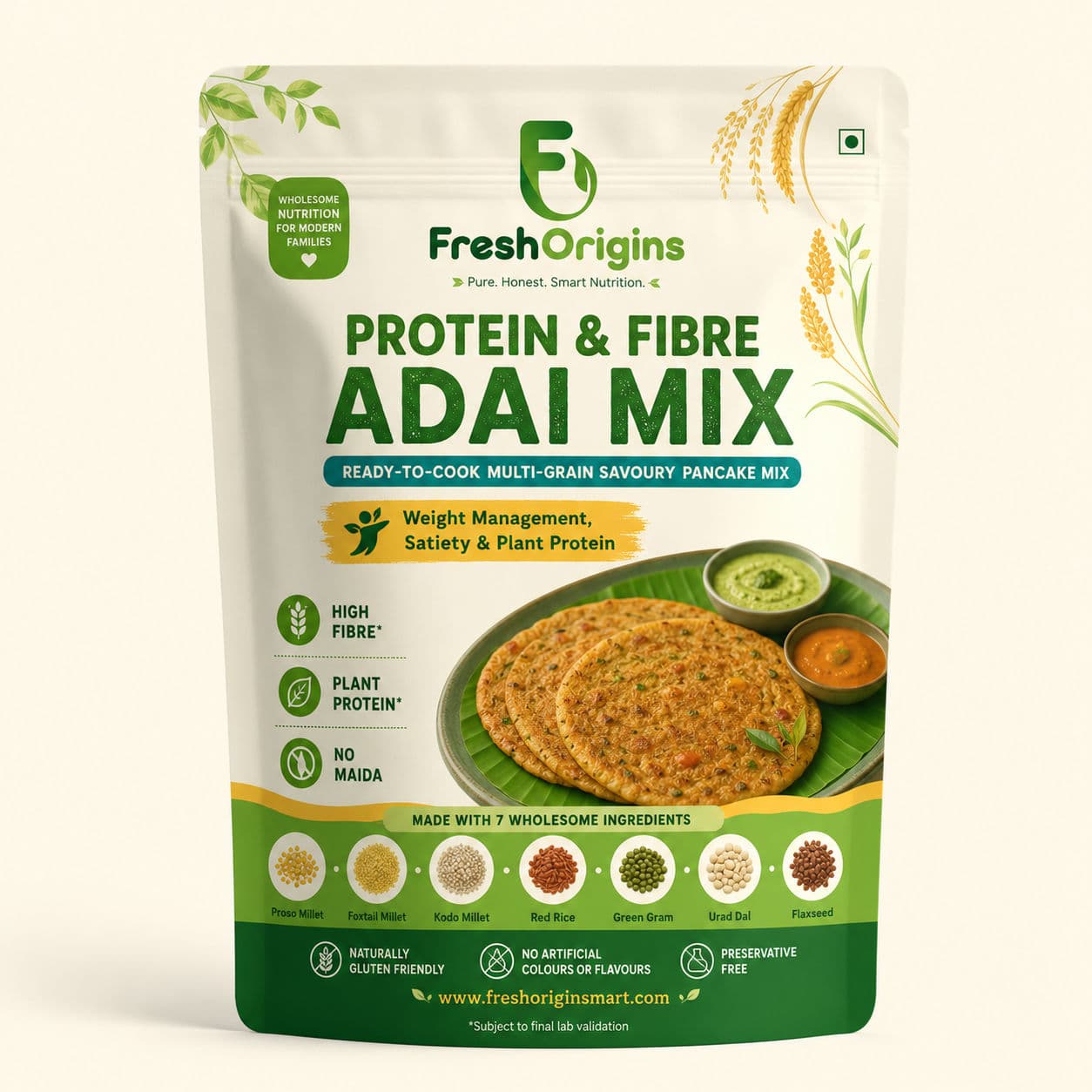
Multi-grain savoury pancake mix with millets, pulses, and flaxseed. · 250 g
Best for: Protein-conscious households wanting a savoury, pulse-rich breakfast or tiffin.
₹140
Questions
No single millet is magic. Bajra and jowar make the most filling rotis; foxtail and little millet are the easiest rice swaps. The millet you'll eat consistently, in sensible portions, is the best one.
The swap raises meal fibre substantially and tends to reduce between-meal snacking, which helps. But total intake, activity, and sleep decide the outcome — treat the swap as one solid habit inside a bigger picture.
No — per 100 g they're similar to rice and wheat in calories. The difference is satiety per calorie: fibre and texture make the same energy hold you longer.
Crash patterns rarely hold. A balanced millet-pulse dinner beats a liquid-only evening for most people. If you're considering meal replacement for medical reasons, do it with professional guidance.